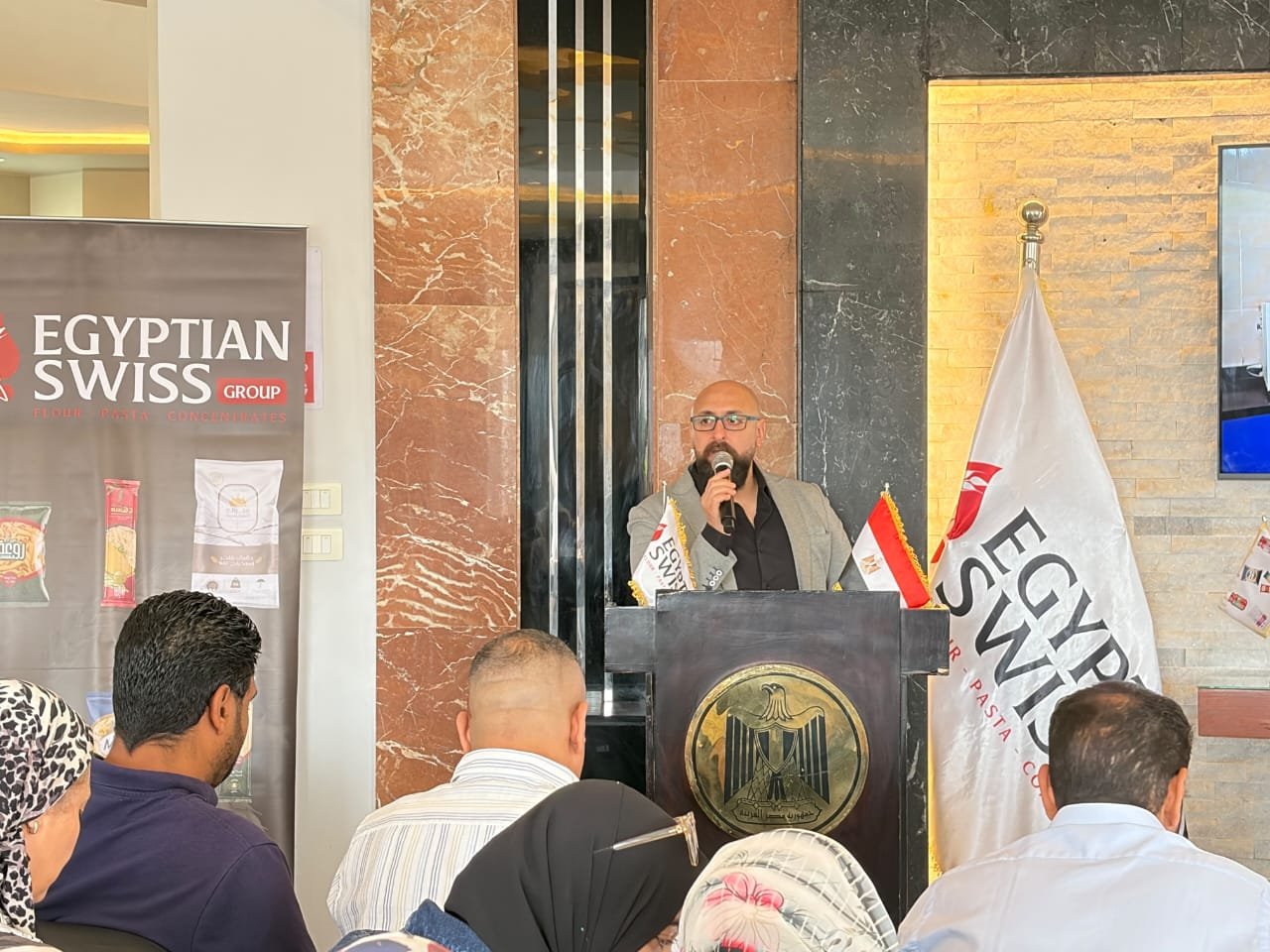
Egyptian Swiss Group Targets EGP 11 Billion in Turnover This Year as It Marks World Pasta Day
Egyptian Swiss Group Invests €5 Million in New Pasta Production Line
Egyptian Swiss Group Celebrates World Pasta Day, Targets EGP 11 Billion in Turnover
Egyptian Swiss Group Accounts for 10% of Egypt’s Pasta Exports and 15% of Flour Exports
On World Pasta Day, Egyptian Swiss Group Eyes New Markets and Considers Bank Financing for Expansion
Egyptian Swiss Group Exports to 60 Countries, Earmarks 80% of Production for Overseas Markets
Egyptian Swiss Group for Pasta, Milling, Concentrates and Grain Trading is targeting turnover of EGP 11 billion this year, with growth of 10% to 15% across its pasta, flour, tomato sauce and grain businesses, the company announced during its World Pasta Day celebrations.
Ahmed El-Sebaie, the group’s General Manager, said at a press conference held to mark World Pasta Day and announce the production of a new range of products that Egyptian Swiss currently exports to approximately 60 countries and allocates nearly 80% of its total production to international markets. The group accounts for around 10% of Egypt’s pasta exports and 15% of its flour exports.
El-Sebaie said the group, which is celebrating more than 30 years since its establishment, has developed an integrated industrial operation spanning grain trading, wheat milling and flour production, as well as the manufacturing of pasta, tomato paste, concentrates and sauces. This diversified business model has strengthened its ability to expand its product portfolio, enter new markets and withstand fluctuations in demand.
He explained that the group initially operated in flour trading before expanding into milling and pasta manufacturing, followed by tomato-based products and sauces. The integration of its manufacturing and distribution operations has helped the company navigate challenges stemming from exchange-rate volatility, the Russia-Ukraine war and disruptions in global markets.
€5 Million Investment in New Pasta Production Line
El-Sebaie revealed that the group has already begun implementing a new investment project to establish a pasta production line at a cost of approximately €5 million, including packaging machinery. The Italian-made production line is expected to take between nine months and one year to arrive, be installed and prepared for operation.
He explained that the group aims to increase its exports by 10% to 15% this year while implementing a new investment plan that includes the €5 million pasta production line, expansion in milling and ready-made sauces, and solar energy projects, as part of a broader strategy to strengthen production capacity and expand its presence in international markets.
El-Sebaie added that the company is considering increasing its milling capacity by installing new production lines next year, with each line expected to cost between €4 million and €5 million, depending on the targeted production capacity and technical specifications of the equipment.
He noted that the group has adopted a five-year investment plan to be implemented in phases, based on market requirements, production capabilities and export opportunities, ensuring that investments are directed toward activities offering the greatest potential for added value.
Regarding financing, El-Sebaie said the group is considering bank financing for its new projects and has received offers from several banks, although it has yet to finalize its financing partners or determine the ultimate financing structure.
He indicated that individual production lines could be financed through different banks, depending on financing terms and the nature of each project, while spreading financial obligations across implementation phases to maintain operational stability.
Milling Capacity Reaches 1,500 Tonnes per Day
El-Sebaie said the group operates two flour mills in the cities of 10th of Ramadan and Alexandria, with a combined milling capacity of approximately 1,500 tonnes of wheat per day, alongside three pasta production lines with a total capacity of 7,500 tonnes per month.
The group also operates a tomato processing plant with a production capacity of approximately 3,500 tonnes of tomato paste, concentrates, sauces and jams, providing a diversified industrial base to support its expansion into international markets.
He explained that the company maintains a presence in the domestic market despite allocating 80% of its production to exports, through its consumer brands, including Rawaa and Dahsha, which offer competitively priced products targeting different consumer segments.
El-Sebaie also highlighted the company’s continued cooperation with the Ministry of Supply through the provision of pasta under the Zina brand in 350-gram packages, covering several varieties, including spaghetti, vermicelli, orzo and pasta for oven-baked dishes.
He emphasized that diversifying sales channels across exports, the domestic market and government supply contracts provides the group with greater flexibility in allocating production and responding to changes in demand, while maintaining affordable prices for consumers.
Expansion into China, Europe and the United States
El-Sebaie said the group is targeting expansion into new export markets, particularly China, European countries and the United States, leveraging its participation in specialized international trade exhibitions, including SIAL in Paris, France, and Gulfood in Dubai, UAE, alongside other international industry events.
He noted that the group has recently received orders from several European markets amid a recovery in demand for certain Egyptian products.
El-Sebaie stressed that the success of participation in international exhibitions should be measured by the quality of potential customers and the value of actual contracts rather than visitor numbers alone. Such events also help strengthen relationships with existing importers and establish new distribution channels.
Regarding China, El-Sebaie revealed that the group has obtained the certification required to export to the Chinese market and has begun communicating with Chinese companies and other entities to explore market-entry opportunities. The company has also held discussions during its participation in an international exhibition in Shanghai.
He explained that flour exports to China face challenges related to import quotas imposed on certain companies, prompting the group to explore alternative commercial arrangements, including supplying flour to a Chinese company planning to establish a bakery products factory in Egypt.
The company is also studying opportunities to export pasta to China in the coming period, subject to the completion of the necessary commercial and technical arrangements.
El-Sebaie emphasized that market diversification is a central pillar of the group’s strategy, aimed at mitigating risks associated with geopolitical tensions, fluctuating demand and supply chain disruptions rather than relying on a single export destination.
He pointed out that political and economic instability in certain markets, including Sudan, has underscored the importance of diversifying export destinations and avoiding excessive dependence on any single market, regardless of advantages such as geographical proximity or ease of payment collection.
### Rising Global Wheat Prices Put Pressure on Profit Margins
Addressing production costs, El-Sebaie said global wheat prices had increased by approximately $50 to $70 over the preceding six weeks, raising flour and pasta production costs and putting pressure on profit margins across the industry.
He emphasized that the group is seeking to avoid passing on higher production costs to consumers in a single price increase, given the sensitivity of demand for food products to price changes. He noted that rising wheat costs cannot always be offset by equivalent and immediate increases in finished-product prices.
El-Sebaie added that export revenues help the group manage cost pressures and secure the foreign currency needed to import raw materials and meet its operational obligations.
He explained that the group relies entirely on imported wheat for its production operations, as locally grown wheat is directed to the government under the existing supply system. The company is therefore working to diversify its import sources to mitigate disruptions in global markets.
The group continuously explores import opportunities from different countries, including Romania and France, based on prices, technical specifications and quality requirements, to secure sufficient raw materials for its factories and ensure uninterrupted production.
Contract Manufacturing Partnerships with Global Brands
El-Sebaie revealed that the group is also pursuing opportunities to manufacture products for major international brands through contract manufacturing and private-label production, while exploring new industrial and investment partnerships.
He explained that the group already manufactures products for companies in Kenya, Yemen and Zambia under those companies’ own brands, leveraging its production capabilities and manufacturing technology in Egypt.
He added that improvements in management systems and corporate governance within the group, which began as a family business, have strengthened its readiness to engage in international partnerships. He reaffirmed the company’s openness to cooperation opportunities that generate mutual benefits.
El-Sebaie also highlighted growing interest among foreign investors in the Egyptian market over the past two years, particularly from Turkish and Chinese companies operating in sectors including food manufacturing and textiles. This trend, he said, presents additional opportunities for joint manufacturing, expertise sharing and technology transfer.
Expansion into Ready-Made Sauces and Tomato Processing
El-Sebaie said the group is considering expanding its tomato processing operations by developing new products and increasing production of ready-made sauces, including pasta sauce and pizza sauce.
He explained that these products are currently marketed internationally but have not yet been introduced to the Egyptian market, noting that they have attracted demand from several international customers.
El-Sebaie added that developing products complementary to the group’s pasta business would allow it to capitalize on existing distribution networks and increase the added value of raw materials without relying on a single product category.
In a related development, he noted that Egypt’s tomato processing industry faces challenges arising from seasonal fluctuations in crop prices, as well as significant losses during harvesting and handling.
He revealed that the group’s estimates suggest tomato crop losses in Egypt could approach 30%, largely due to harvesting methods and post-harvest handling practices. He stressed the need to improve agricultural production, harvesting, transportation and storage systems to enhance processing efficiency and reduce waste.
El-Sebaie explained that reducing crop losses could help stabilize raw material supplies to factories and limit price volatility, supporting further expansion in tomato paste and concentrate production for both domestic and export markets.
### Solar Energy Expansion and Carbon Footprint Reduction
El-Sebaie revealed that the group has begun assessing new solar energy projects across its industrial facilities, aiming to reduce electricity costs, improve operational efficiency and minimize the environmental impact of its manufacturing activities.
He explained that the company has already received price quotations for the proposed projects and established a preliminary budget, while continuing to conduct the necessary studies before making final decisions on implementation and timelines.
El-Sebaie added that the group is simultaneously working to measure the carbon footprint of its operations and prepare related reports, drawing on external specialists and auditors alongside an internal team responsible for monitoring sustainability requirements.
He emphasized that expanding renewable energy use and improving environmental measurement and reporting systems have become increasingly important for strengthening the competitiveness of Egyptian products in global markets, particularly as international sustainability requirements and scrutiny of the environmental impact of industrial activities continue to intensify.
El-Sebaie concluded that the group remains committed to implementing its development and expansion plans in phases, with the aim of increasing production and exports, diversifying markets and product offerings, and maintaining its competitiveness in the domestic market while addressing challenges related to raw material prices, operating costs and international shipping expenses.
Share this content:










إرسال التعليق