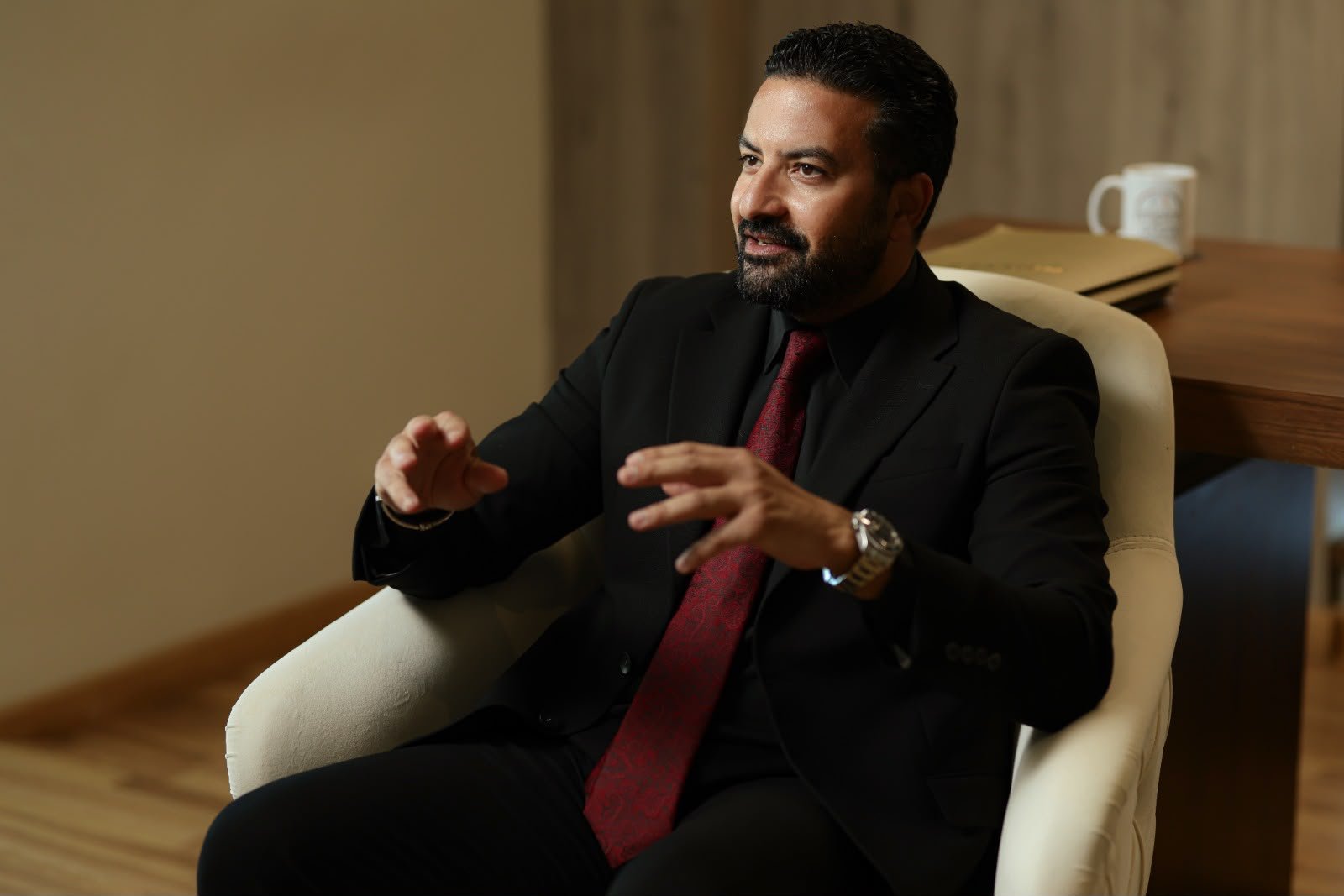
Moustafa Mohsen: The Egyptian real estate market is strong and the current regulatory phase is natural after the significant projects expansion
Moustafa Mohsen: tha raise in building material prices disrupted real estate projects cost calculations
Moustafa Mohsen: The real estate market is not suffering from recession..It’s in a regulatory phase after the projects boom
Moustafa Mohsen: demand for real estate is continuous.. and the market is undergoing a regulatory period
Moustafa Mohsen, Chairman of Empire State Developments company, said that the Egyptian real estate market remains very strong and is considered one of the strongest real estate markets in the region, despite the regulatory phase the sector is currently witnessing, noting that the significant expansion in cities and projects in recent years has led to an increase in the number of companies and projects, making market regulation a natural and necessary step.
He added during his interview with the T.v. presenter Taher Hamdi on “Aqar Misr” program broadcast on Al-Nahar TV, that Egypt has witnessed significant urban expansion in recent years, with the emergence of new cities and urban extensions in various governorates, coinciding with an increase in the number of companies operating in the real estate market.
He emphasized that the increased offered projects does not signify an oversupply of units or a lack of demand, noting that the market still needs new units given the population size and growth rates, and that’s what has changed is the increased choices available to clients.
Chairman of Empire State assured that the decline in sales during certain periods does not indicate a market recession, but rather reflects a natural phase of restructuring and reorganizing the sector after the rapid growth it has witnessed in the recent years.
He pointed that Egypt’s urban areas have witnessed significant expansion over the past decade, coinciding with the rapid pace of project implementation, which has created a need for a period to regulate companies and market mechanisms.
Mohsen addressed the issue of delayed projects, explaining that the monitoring of approximately 16,000 projects, with 500 to 600 experiencing delays, does not necessarily mean that these projects are concentrated in one area, rather, delays exist in various regions across the country, including the North Coast, the New Capital, and New Cairo.
He clarified that delays in some projects are not necessarily due to problems with the developers, instead, a number of companies have been affected by the significant fluctuations in exchange rates and the cost of building materials over the past few years.
He pointed that some developers began their projects in 2021 and 2022 based on cost levels entirely different from those they encountered during implementation, noting that a real estate project requires an average of four years to complete, which has led to the rise in raw material and energy prices placing considerable pressure on the feasibility studies and costs calculated at the project’s inception.
He added that developers remain committed to the prices stipulated in contracts with clients, despite the increased cost of implementation, which led to great losses for some real estate development companies in certain projects launched during this period.
Regarding solutions to address market challenges, Mohsen emphasized the need to balance sales and implementation, rather than focusing solely on sales, assuring that the priority at this stage should be for completing existing projects and accelerating implementation rates.
He emphasized that every available pound within the company should be directed towards implementation during this period, even within a delay in launching new projects or acquiring new investments and land until existing projects are finished.
He added that some developers have several projects underway simultaneously, but projects that began when construction costs were significantly lower than the current levels, as this has prompted some companies to embark on new projects to generate the necessary solvency to complete their existing ones.
He explained that this situation is also linked to the lack of direct bank financing for real estate development, as development companies only obtain bank financing for projects, after delivery to the client and the commencement of payment collection, which increases the financial pressure on developers.
Mohsen pointed that the challenges the market has faced recently could provide an opportunity to develop new solutions, especially companies struggling due to increased costs not lack of commitment.
He assured that discussions are underway regarding mechanisms for addressing the problems of developers and projects, anticipating that solutions will be reached that support viable companies and projects.
He emphasized that among the possible solutions are the entry of another developer to participate in some projects, or the provision of bank financing for developers, in addition to increasing the state’s participation, and reconsidering the payment periods for land installments or reducing some of the interest associated with them.
Chairman of Empire State noted that the real estate market has witnessed a significant shift in client behavior, with buyers becoming more informed and better equipped to research projects and developers before making a purchase decision.
He said that clients are no longer simply looking to buy a residential, commercial, or administrative unit, but are now also considering the location, the developer, investment opportunities, and the project’s ability to meet their future needs.
He added that clients are now also paying close attention to on the ground implementation rates, noting that the commencement of work and the actual project’s realization are crucial elements in building trust and credibility between the developer and the buyer.
Regarding the New Administrative Capital, Mohsen described it as a national project, emphasizing that the capital is now a tangible reality and has witnessed significant development over the past few years.
He pointed that some foreign investors who visited the New Capital expressed positive impressions upon the scale of urban development and the existing projects, indicating that the project still has stages of development ahead.
He assured that the New Capital includes a large number of national projects, headquarters for ministries and government agencies, the Parliament building, and the Opera House, in addition to projects by real estate companies, considering the project a major leap forward in the landscape of Egyptian urban development.
Mohsen revealed that his experience in the market exceeds 30 years, explaining that he began working in contracting and finishing before shifting to real estate development.
He pointed that the real estate development company he founded in 2020 was an expansion of his experience in contracting and finishing, noting that the group owns a wood factory, a contracting and finishing company, and a real estate development company, with the various activities complementing each other.
He emphasized that direct following up of constructions is a fundamental part of his management style, explaining that following up on project details and sites helps identify problems early and address them before they escalate into major crises.
Mohsen advised buyers looking to purchase a unit now, pointing that the purchase decision should be linked to the client’s needs and goals, not just whether the timing is right.
He said that land prices, construction costs, energy costs, and any disruptions in import chains could affect future project implementation costs, thus, the opportunity to buy in a good project with a reputable developer is worth considering, while emphasizing the importance of thoroughly researching the developer and the project before making a decision.
He assured that client has become more capable of studying the market, and can use his experience of real estate marketing companies or specialists to choose the most suitable project for his needs, whether the goal is housing or investment.
Share this content:







إرسال التعليق